

ISOC in Defender: What's Behind Microsoft's Announcement


Ever since Microsoft announced ISOC in Defender, the acronym has shown up in every other security discussion. We explain what ISOC is, what it already delivers today, and what it means for Defender XDR and Microsoft Sentinel.

The Key Points
- Not a new product: ISOC is Defender XDR. It can be extended with an ISOC Workspace, which is Sentinel under the hood.
- What it delivers today: 90 days of retention for Defender XDR tables, eliminating the double-billing via Sentinel, and an ingestion price of $2.40 per GB instead of Commitment Tiers. The switch is optional.
- What remains open: Setting up ISOC is just the start; the real work lies in operating it. Our CSOC is ready for ISOC.
What Is ISOC?
"In July 2026, we introduced the end-to-end cyber stack alongside Microsoft Perception, with the focus of delivering the right models, a harness, and specialized agents to help defenders perceive, reason, and act at machine speed. But we are innovating at every layer of the stack, because intelligence and orchestration alone are not enough. Agents depend on the rest of the stack working as one. They need signals and sensors that provide visibility, context that turns those signals into understanding, and actuators that translate decisions into protection. With ISOC, these layers work in unison, so agents can move beyond isolated tasks and help operate an agentic SOC.
Signals and sensors give the system awareness. Context turns those signals into understanding. Actuators turn insights into protective action.
ISOC brings these capabilities together as a foundation, so humans and agents can operate as one system, each contributing what they do best. Agents provide the speed and scale to execute continuously, while people set priorities, apply judgment, and define the outcomes that matter. Together, they empower defenders to keep pace with AI-powered threat actors and achieve better security outcomes."
What ISOC Really Is
Anyone who read the announcement and came away none the wiser is in good company. It describes the idea well, but never spells out which building blocks ISOC consists of or what changes in the existing stack.
Today, Defender XDR and Microsoft Sentinel are separate products in the Microsoft stack. They share a portal, but each has to be set up and operated independently, and each brings its own detection platform. Sentinel has Workbooks for reports and drilldowns that you build yourself, while Defender XDR ships with ready-made reports that offer almost no customization.
That is where the announcement starts to make sense. Microsoft Perception and the company's overall direction are fully aligned around AI: agents are meant to handle the tedious, repetitive work, with human experts steering that work and reviewing the results. That becomes difficult when an agent has to deal with two systems that have different detection engines, each with its own schemas, properties, and options.
Functionally, Defender XDR and Sentinel continue to exist. With ISOC, however, you no longer need to set up and operate a separate Sentinel Workspace. ISOC itself is not a new product; it is an initiative aimed at merging XDR, SIEM, and SOAR into a single platform that both agents and human analysts can rely on for security operations. That work is not finished, but the first visible step is already there: a unified detection engine that no longer draws a line between Defender XDR and Sentinel. Organizations that do not need the SIEM or SOAR components simply continue running XDR on its own, with no added cost and no added complexity. Both configurations are called ISOC.
The bottom line: ISOC is Defender XDR, with the option to extend it via an ISOC Workspace that is Sentinel under the hood, plus a few benefits that are only available with ISOC.
What ISOC Delivers Today
ISOC is the foundation of Microsoft's security stack, and it already delivers tangible benefits. The switch is optional: anyone already running Defender XDR and, where applicable, Microsoft Sentinel can move to ISOC at any time or stay with their current setup.
90 Days of Retention for Defender XDR Tables
Until now, anyone who needed more than 30 days of Advanced Hunting retention from Defender XDR had to duplicate those tables into Microsoft Sentinel and pay the ingestion costs for doing so. That double-billing goes away, because ISOC includes 90 days of retention for these tables. This applies to MDE, MDO, MDI, MDCA, MDC, and Entra ID Protection, without a single byte flowing into Microsoft Sentinel. Whether longer retention periods beyond that will become available without Sentinel ingestion, particularly via the Data Lake, remains to be seen.
Sentinel Gets Cheaper, With an Asterisk
ISOC introduces a new pricing structure for ingestion into Microsoft Sentinel. As a SIEM, Sentinel remains the central entry point for logs from third-party sources, and ISOC does not change that. To make pricing more transparent, Microsoft Sentinel in ISOC gets a new ingestion price of $2.40 per GB, while Commitment Tiers are discontinued.
Commitment Tiers offered discounts based on a daily minimum volume: for example, 40 percent off the ingestion price at 400 GB per day. You always paid for 400 GB a day, even if less came in, but you got 40 percent off the pay-as-you-go rate, and that reduced price applied to everything above the threshold as well. As good as the savings with Commitment Tiers could be, they also made Sentinel's pricing model genuinely hard to understand. Replacing them with a straightforwardly lower ingestion price strikes us as a sensible change.
Regional pricing has not been announced, and it is unclear which region the stated $2.40 applies to. For now, we expect customers in Europe in particular to pay more than $2.40 for ISOC ingestion, though we hope the percentage reduction will be consistent across all regions.
What You Need for ISOC
Microsoft Defender Suite, Microsoft 365 E5, or E7 qualifies you for ISOC. There is no minimum license count, and the built-in features require no setup at all. Only the ISOC Workspace requires an Azure subscription.
Beyond the license, existing Sentinel customers currently face exactly one additional condition: the Data Lake must not have been provisioned before September 23, 2026. We expect this condition to be lifted soon, though no date has been given.
Getting Started with ISOC
There are currently two starting points for ISOC: either you have never used Microsoft Sentinel in your environment, or you are already running it.
As a Defender-Only Customer
If you do not need Sentinel features such as ingesting third-party logs, there is nothing to do. ISOC features like Case Management, AI Playbook Generator, and Workbooks are already available in the Security Center.
You have probably still found yourself wondering which information you are missing and which assets are not being monitored. That is where the ISOC Workspace comes in: it extends Defender XDR with the ability to connect third-party sources. The Resource Group and Workspace are created automatically. In our testing, the result behaved exactly like a Sentinel Workspace, and even old ARM templates deployed without any changes.
An ISOC Workspace adds:
- Third-party and additional Microsoft data: more than 500 Data Connectors, covering firewalls and proxies, AWS and GCP, and on-premises sources.
- Content Hub: ready-made solutions with connectors, Analytics Rules, Workbooks, and Playbooks.
- UEBA: User and Entity Behavior Analytics, which establishes a baseline of normal behavior and flags anomalies across users, devices, and apps.
- Threat Intelligence: your own indicators or those from third parties, matched against your data.
- CI/CD: detections, Workbooks, and Playbooks deployed as code from your own repository.
For Defender-only customers, ISOC turns an XDR into a SIEM that can be set up in minutes. What it does not answer are the questions that make a SIEM actually useful: which data sources matter, which use cases need detections, which data belongs in the Analytics tier versus the Data Lake tier, and who responds when an alert fires. Third-party data in particular needs a plan before the first connector goes live.
As a Customer with Defender XDR and Sentinel
Since November 15, existing Sentinel customers have been able to switch to ISOC, and nothing changes if you choose not to. The decision depends on what ISOC concretely gives you. You get longer retention for Defender XDR and OfficeActivity data, and you may save on costs as described above. Whether ISOC works out cheaper for you depends on your ingestion volume. Before deciding, there are four things you can check yourself:
- Operations: how your SOC works today, whether in Sentinel or the Defender Portal.
- Ingestion for retention: which Defender tables you are pulling into Sentinel primarily to keep them for more than 30 days.
- Costs: how much of your Microsoft data is covered today by the 5 MB benefit and how your third-party data comes in.
- Data Lake: whether you are currently using the Sentinel Data Lake or planning to.
That last point matters because the Data Lake changes with ISOC. In Phase 2, it becomes part of ISOC itself: separate onboarding goes away, Workspace data is mirrored into the Data Lake at no extra cost, and it is queried with KQL in Advanced Hunting. We expect more details on this integration soon.
Regardless of ISOC, Sentinel leaves the Azure portal on March 31, 2027. Anyone still working there will need to move to the Defender Portal first.
How Far ISOC Has Come
ISOC itself, without the ISOC Workspace, is generally available (GA). The ISOC Workspace is currently in Public Preview. We expect that to change fairly soon, though no general availability date for ISOC Workspaces has been announced yet.
ISOC in the glueckkanja CSOC
As an MSSP, we need to stay ahead of developments, so we tested ISOC as soon as it was available. Our main question was whether our CSOC operations would run on an ISOC Workspace exactly as they do on Sentinel.
The start was unspectacular. ISOC features were already present in Defender XDR, and a wizard in the portal created the ISOC Workspace, complete with Resource Group and Log Analytics Workspace. What we got was, in every practical respect, a standard Microsoft Sentinel Workspace.
Then came the real test. We onboarded the tenant into our CSOC and deployed our detections, our Threat Intelligence, and our automation as code. Not a single adjustment was needed, and our MSSP access works exactly as it does today with Sentinel and Defender XDR.
Our CSOC is ready for ISOC, whether a customer starts with Defender alone or is already running Sentinel.
For us and our CSOC service, nothing changes in the immediate term. Products like Microsoft Perception, the real driver behind ISOC, are just around the corner, and we look forward to putting them to work and using them to improve both our customers' security and our own service.
Setup Is Only the Beginning
ISOC signals where Microsoft is heading, and the direction is right. A unified platform for human analysts and AI agents is an important step in a security landscape that is changing fast. That said, setting up ISOC is only the beginning; the real work lies in operating it. An MXDR and SIEM platform that provides reliable protection needs the right data sources, a data tiering strategy that keeps costs in check, a solid catalog of use cases, and automations and detections that go well beyond what Microsoft ships out of the box. That is exactly what we deliver with our CSOC.
Microsoft ISOC and glueckkanja CSOC: better together.
Sources
Similar Posts

ISOC in Defender: What's Behind Microsoft's Announcement
Ever since Microsoft announced ISOC in Defender, the acronym has shown up in every other security discussion. We explain what ...

Autopilot Device Preparation Becomes the Standard, Hybrid Join Falls Behind
Since September, Microsoft has recommended Autopilot Device Preparation as the standard for user-driven Windows deployments. The new approach is genuinely ...
Browser Extensions as a Corporate Blind Spot
Browser extensions have long been part of the everyday digital workplace. Translators, password managers, VPNs, ad blockers, productivity tools and, ...

Who Built These Agents?
E7 bundles E5, Copilot, the Entra Suite and Agent 365. But a license doesn't clean up your tenant. Who is ...

Let´s Gossip the Cloud. Our Podcast All About Azure.
Cloud myths, Azure costs, Infrastructure as Code, DevOps, and data: in our podcast The Cloud Gossip, Sarah and Lisa talk ...
The End of MFA via SMS
Why organizations should move to phishing-resistant and passwordless authentication now.

ClickFix. When the user is the exploit, and how to stop it
ClickFix turns users into their own attacker: a fake CAPTCHA, a copy-paste, and malware runs in memory with nothing on ...
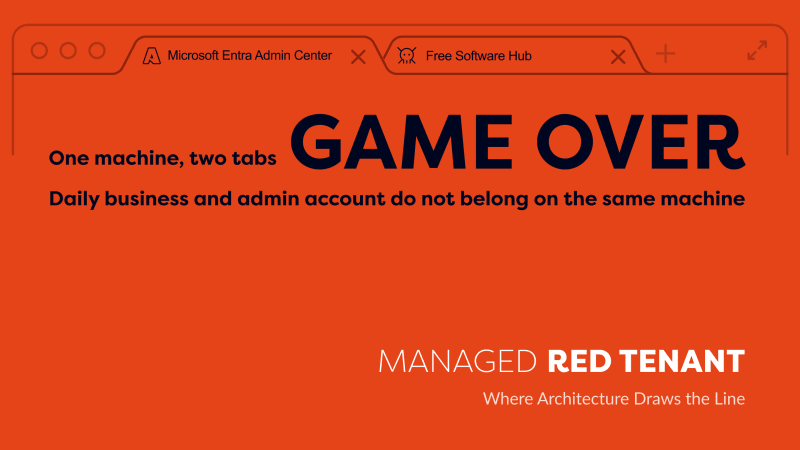
Admin Work and Everyday Work on One Machine? Game Over.
Why one tenant is not enough for CIOs, and why the second one is rarely part of the plan. The ...
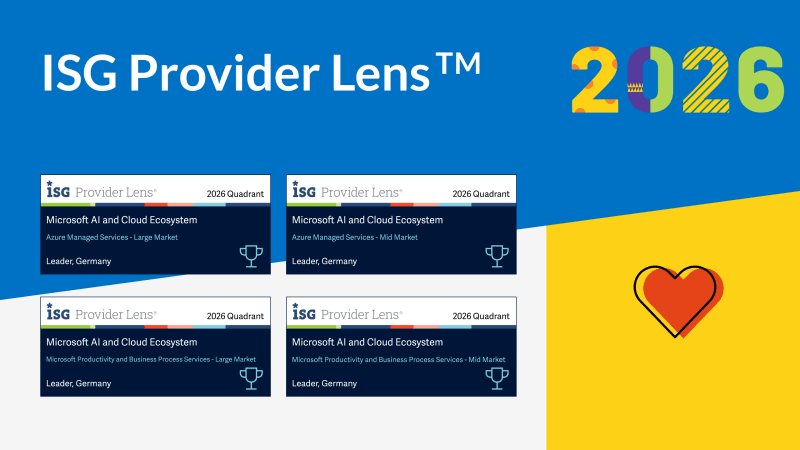
Four Times Leader. glueckkanja in the ISG Study Germany 2026
The ISG Provider Lens® study 2026 positions glueckkanja as a Leader in Germany in four quadrants: Microsoft Productivity and Business ...
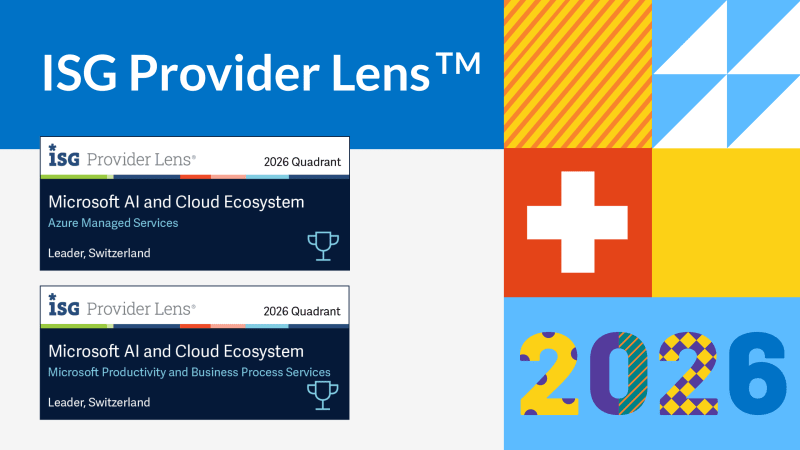
From Rising Star to Leader. glueckkanja in the ISG Study Switzerland 2026
The ISG Provider Lens® study 2026 positions glueckkanja as a Leader in Switzerland in the Microsoft AI and Cloud Ecosystem ...

Outbreak. What the OpenAI/Hugging Face incident reveals and what it doesn't
An AI agent breaks out of its test environment, finds a zero-day, and hacks another company. Sounds like a movie ...
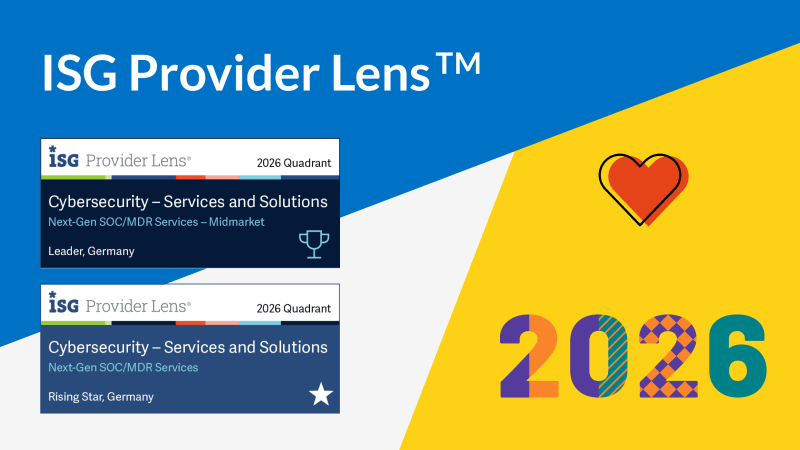
Leader and Rising Star. glueckkanja in the ISG Cybersecurity Study 2026
The ISG Provider Lens® study Cybersecurity 2026 names glueckkanja a Leader in the Next-Gen SOC/MDR Services (Midmarket) quadrant. In the ...
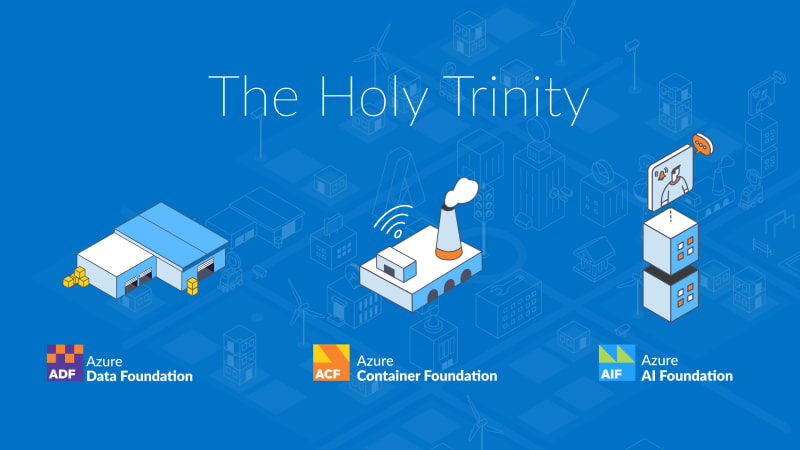
The Holy Trinity: What AI Actually Needs to Get to Work
A manufacturing company wants to know which of its 14,000 SKUs actually turn a profit. The answer sits in three ...
Contract Signed: Here's How Your Onboarding Works
Your contract is signed, the first big step is done. But what happens now? We take you behind the scenes ...
Microsoft Frontier Partner: we are among the few
Microsoft has recently introduced a new top-tier recognition within its AI Cloud Partner Program: the Frontier Partner Badge. It is ...