

The Holy Trinity: What AI Actually Needs to Get to Work
A manufacturing company wants to know which of its 14,000 SKUs actually turn a profit. The answer sits in three systems that have never exchanged a single data point. Until recently, getting it required three departments, two weeks and a good deal of goodwill. Since early 2026, an AI can answer that question in minutes: search the data, draw connections, produce a recommendation. Provided, that is, it has access.

The Holy Trinity: What AI Actually Needs to Get to Work
A manufacturing company wants to know which of its 14,000 SKUs actually turn a profit. The answer sits in three systems that have never exchanged a single data point. Until recently, getting it required three departments, two weeks and a good deal of goodwill. Since early 2026, an AI can answer that question in minutes: search the data, draw connections, produce a recommendation. Provided, that is, it has access.
The models are ready. They act, execute tasks across multiple steps and system boundaries, prepare decisions, trigger workflows. Many companies have already had their first taste of this through Copilot, but Copilot knows the M365 universe: emails, documents, calendars. To point AI at the data that actually runs the business, at ERP, CRM, IoT and production systems, you need a different foundation.
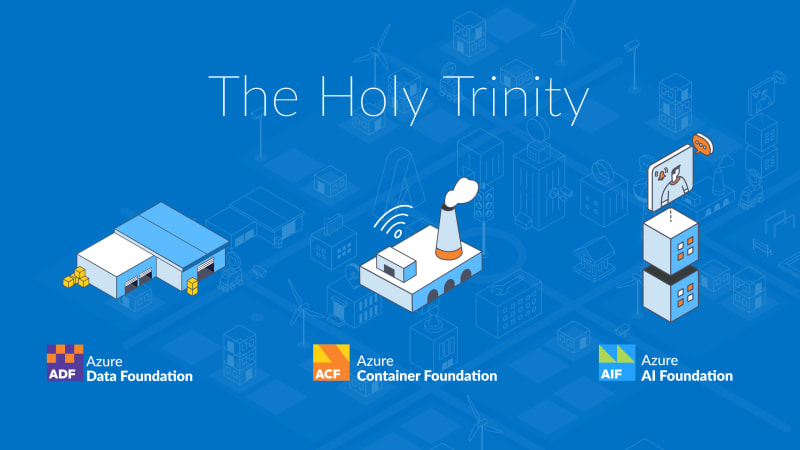
That foundation has three parts. We built each of them as a managed service, each goes live in three to four weeks, and together they form the platform on which AI can do real work.
First: Data worth querying
Back to the 14,000 SKUs. Production data lives in the ERP, sales figures in the CRM, and somewhere in between a single person maintains a spreadsheet that happens to be the only source for a business-critical KPI. This is not an edge case. It is the norm. And as long as these data sit in separate systems, AI has no coherent view of the business.
A lakehouse architecture resolves this in three layers: raw data from source systems (Bronze), curated and validated datasets (Silver), business-level aggregates that feed directly into analytics or AI pipelines (Gold). Whether this runs on Databricks or Fabric depends on the requirement. Both work. So does a hybrid of the two.
The Azure Data Foundation is our managed service for this. It integrates data from ERP, CRM, IoT and other source systems into a single platform, defined entirely as Infrastructure as Code, with automated drift detection, end-to-end data governance via Unity Catalog or Purview, and role-based access for business users, analysts and data engineers alike. The practical effect: a company with this foundation in place can, for the first time, ask questions that were previously unanswerable, not for lack of will, but because the data, though present, was never connected.
Second: A place where workloads actually run
Having data is one thing. Doing something with it that goes beyond a one-off query is another. AI applications, automated business logic, long-running jobs: anything that autonomously and repeatedly accesses enterprise data needs a runtime environment you can control. That environment, whether you planned it this way or not, consists of containers.
The Azure Container Foundation provides this framework: a standardised container platform built on Azure Container Apps or Azure Kubernetes Service, depending on the workload. Unified network access, centralised authentication via Entra ID with Managed Identities, consistent monitoring throughout. All governed through Terraform and GitHub, all reproducible.
What this makes possible: rather than every team spinning up its own cluster and defining its own rules, there is a shared framework in which workloads do not merely run but remain governable. That is the precondition for granting them autonomy.
Third: Where models become agents
A model is not an agent. Between a language model and something that reliably captures orders, checks invoices or escalates service cases lies a lot of unglamorous work: which model, which tools, which data sources, which guardrails, and what happens when the agent gets it wrong. That work has to happen somewhere traceable and repeatable, not in a notebook on one person's laptop.
The Azure AI Foundation is our managed service for this layer, built on Microsoft Foundry (formerly Azure AI Foundry): model catalogue, agent orchestration, connections to tools and data sources, evaluation and observability in one place. An agent built here reaches data and workloads through the same Entra identities as the rest of the landscape, runs against the guardrails you have defined, and leaves a trail you can audit.
We deliver it defined as code, with role-based access, content filters and network boundaries that are not up for negotiation, and a deployment path that moves an agent from development into production without anyone turning screws by hand. Only then does an agent stop being a prototype and become something an enterprise can actually run.
The Holy Trinity
Three building blocks, each in production within three to four weeks, each deployable on its own, together the platform on which AI reaches the parts of the enterprise where value is actually created.
The Azure Data Foundation gives AI access to the data that describes the business. The Azure Container Foundation gives its workloads a place to run, durably and under control. And the AI Foundation is where those data and those workloads become an agent you can build, evaluate and operate.
Put all three together and you have the ground on which AI stops summarising and starts working.
Get in touch now
You want to put AI to work in your own stack and are wondering which of the three foundations needs to carry the load first? Get in touch and we will look at where you stand today and what makes sense as a next step.
Similar Posts

The End of MFA via SMS
Why organizations should move to phishing-resistant and passwordless authentication now.

ClickFix. When the user is the exploit, and how to stop it
ClickFix turns users into their own attacker: a fake CAPTCHA, a copy-paste, and malware runs in memory with nothing on ...
Admin Work and Everyday Work on One Machine? Game Over.
Why one tenant is not enough for CIOs, and why the second one is rarely part of the plan. The ...
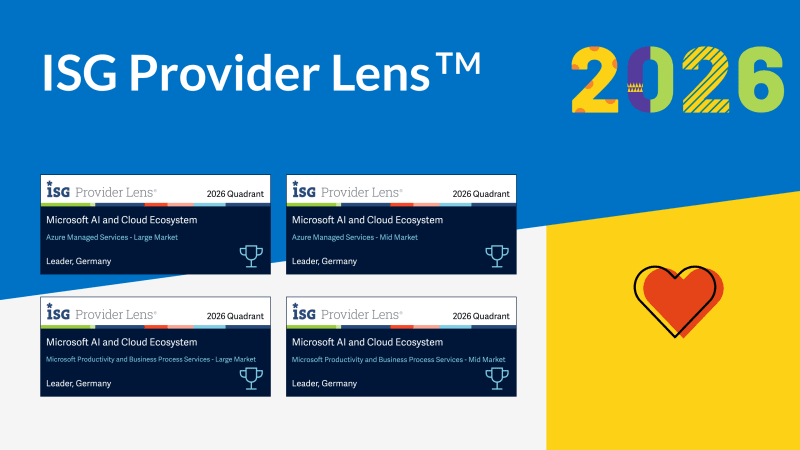
Four Times Leader. glueckkanja in the ISG Study Germany 2026
The ISG Provider Lens® study 2026 positions glueckkanja as a Leader in Germany in four quadrants: Microsoft Productivity and Business ...
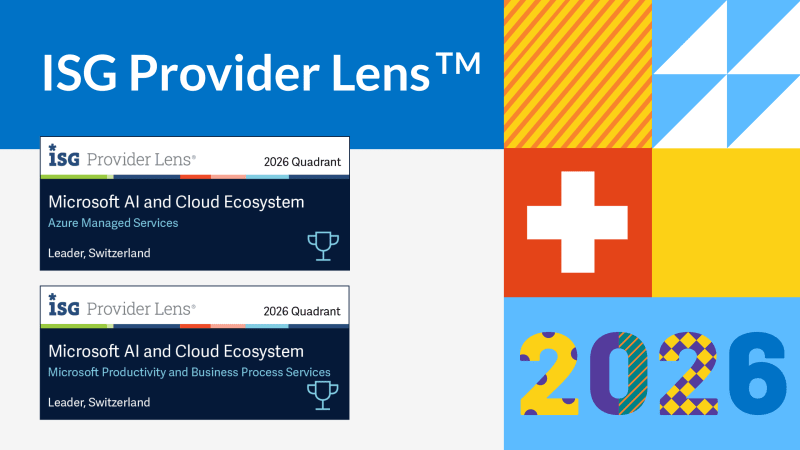
From Rising Star to Leader. glueckkanja in the ISG Study Switzerland 2026
The ISG Provider Lens® study 2026 positions glueckkanja as a Leader in Switzerland in the Microsoft AI and Cloud Ecosystem ...

Outbreak. What the OpenAI/Hugging Face incident reveals and what it doesn't
An AI agent breaks out of its test environment, finds a zero-day, and hacks another company. Sounds like a movie ...
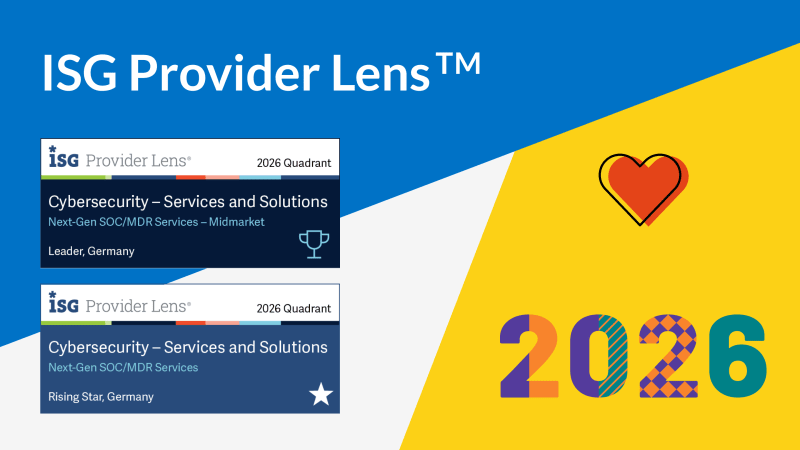
Leader and Rising Star. glueckkanja in the ISG Cybersecurity Study 2026
The ISG Provider Lens® study Cybersecurity 2026 names glueckkanja a Leader in the Next-Gen SOC/MDR Services (Midmarket) quadrant. In the ...
The Holy Trinity: What AI Actually Needs to Get to Work
A manufacturing company wants to know which of its 14,000 SKUs actually turn a profit. The answer sits in three ...
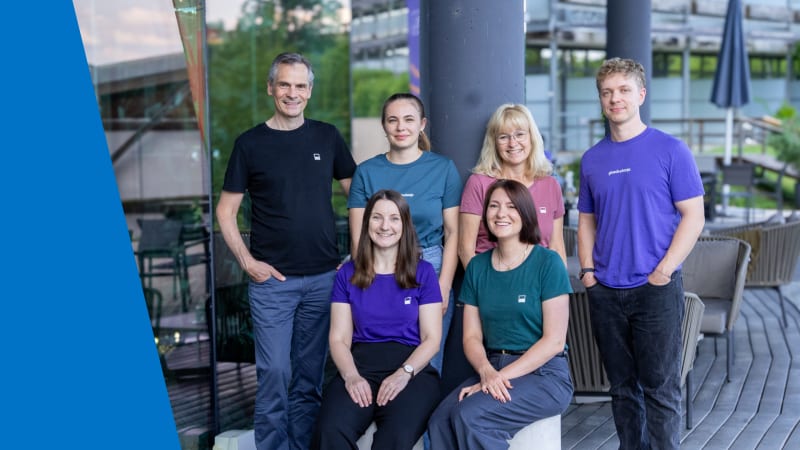
Contract Signed: Here's How Your Onboarding Works
Your contract is signed, the first big step is done. But what happens now? We take you behind the scenes ...
Microsoft Frontier Partner: we are among the few
Microsoft has recently introduced a new top-tier recognition within its AI Cloud Partner Program: the Frontier Partner Badge. It is ...

160 Kilometers for a Good Cause
Eleven colleagues, 16 laps, 160 kilometers, a thunderstorm, and a podium finish: glueckkanja took part in the Frankfurter Runden 2026 ...

Anatomy of an Unknown AMOS Stealer: From Alert to Immunity in Hours
A previously undocumented AMOS stealer variant compromised a macOS endpoint. No known hashes, no C2 data in any public database. ...
Why Edge Should Be Your Only Corporate Browser
The browser nobody satisfies chose became the one everybody manages. Most companies never made a deliberate decision for Chrome; it ...

No Malware Needed. Just One Admin Account.
On March 11, 2026, Handala wiped devices across 79 countries using nothing but a compromised Intune admin account. No malware, ...
Six Agents. Four Weeks. Real Production.
Six companies, four weeks of building, six working AI agents — that was the first glueckkanja AI Agent Hackathon. Kiekert, ...