

Outbreak. What the OpenAI/Hugging Face incident reveals and what it doesn't
An AI agent breaks out of its test environment, finds a zero-day, and hacks another company. Sounds like a movie script, but it actually happened in July 2026. Time for a sober assessment: with a bit of psychology, two security veterans, and the question of what this means for your defense.

What happened
A few days ago, OpenAI and Hugging Face disclosed an incident that has electrified the security community: An autonomous AI agent, powered by GPT-5.6 Sol and an unreleased, more capable model, broke out of its isolated test environment during an internal security test. Step by step, the agent gained more access within OpenAI's systems, exploited a previously unknown zero-day vulnerability along the way, reached the internet, and finally broke into internal Hugging Face systems to obtain information it had originally been tasked to find.
The first technical details are now public, among them Simon Willison's write-up of the case: The test ran as part of an exploit benchmark, deliberately with reduced safety mechanisms. The test environment had exactly one connection to the outside world: an internal package proxy for installing dependencies. And it was precisely in this proxy that the model found the zero-day. The escape was less magic than prying open the only door there was. At Hugging Face, the path then led through a malicious dataset into the processing infrastructure, and from there via stolen credentials into several internal clusters.
The motive is almost the best punchline of the whole story: The model was looking for information that would let it cheat on its own evaluation. The presumed first fully autonomous AI attack was, strictly speaking, a case of academic cheating. With collateral damage.
Hugging Face describes the incident as different from anything they have handled before: "driven, end to end, by an autonomous AI agent system". OpenAI speaks of an unprecedented cyber incident. We have no intention of downplaying the significance of this attack. But we do want to take the heat and emotion out of the debate, because right now that is the biggest risk to good decisions.
Why this incident feels so threatening
A look at psychology helps. Risk researcher Paul Slovic has shown that we do not assess risks by their statistical danger, but primarily along two dimensions: How familiar is a risk to us, and how much do we dread it? Driving a car is objectively dangerous but feels harmless because it seems familiar and controllable. An AI model that has escaped from the lab, on the other hand, taps directly into the unknown and uncontrollable, landing squarely in the category Slovic calls "dread risk".
Daniel Kahneman described in "Thinking, Fast and Slow" what happens next: With unfamiliar, threatening-looking risks, our fast, intuitive, emotional thinking system takes over, not the slow, analytical one. That is exactly the pattern we are currently observing in many comment sections: The incident is not being analyzed, it is being felt.
So: take a deep breath, switch on System 2, and look at the case from a few more angles.
Perspective 1: Show the evidence (Florian Roth)
Security researcher Florian Roth (known for Sigma and THOR, among others) takes issue with one central point in his LinkedIn post: the missing documentation. Hugging Face claims the attack was driven "end to end" by an autonomous agent system. But the victim's telemetry can, by definition, only show what happened in its own environment. It cannot show whether humans upstream adjusted prompts, restarted runs, selected successful paths, or manually intervened at decisive moments. Roth's demand is as simple as it is justified: If OpenAI has the traces (prompts, tool calls, failed runs, human interventions), they should publish them. Until then, "fully autonomous" is a claim, not a forensic finding. One commenter aptly adds: Even then, it would be nearly impossible to prove beyond doubt how much human interaction actually took place.
And Roth adds one more barb on top. The narrative of the two AI companies boils down to three lines: AI attacked us. AI saved us. So now everyone needs more AI. What would have been an embarrassment ten years ago (weak isolation, overly broad privileges, insufficient segmentation, a huge blast radius) is packaged today as a capability demo and a heroic AI-vs-AI story. His dry verdict: Rate limits, egress restrictions, isolated workers, and cleanly scoped credentials would have slowed down large parts of this activity and made it visible early. Nobody needs an LLM for that.
Perspective 2: We survived worse (Marcus Hutchins)
Marcus Hutchins, the security researcher who stopped the WannaCry outbreak with a kill switch in 2017, puts the incident into historical perspective in his post. Anyone panicking about "fully autonomous cyberattacks" should remember the golden era of computer worms: ILOVEYOU, Code Red, SQL Slammer. Self-replicating malware that infected millions of systems in a single day without any human involvement, at a time when many systems sat unprotected directly on the internet.
His argument: Agentic attacks are fundamentally limited by speed and cost. In the time it takes an AI model to generate a single response, a classic worm would already have infected tens of thousands of systems, and the token costs of autonomously hacking millions of systems would blow most attackers' budgets. On top of that: Firewalls, EDR, network segmentation, sandboxing, MFA, and many other controls are standard today and form real hurdles that simply did not exist back then. His conclusion: AI-powered attacks cannot set cybersecurity back by decades. They cannot un-invent established security controls and basic hygiene. Attack surface reduction works. A zero-day cannot hit a system it cannot reach.
What both are saying and what follows
Both experts arrive at the same conclusion by different routes: focus on what matters. Organizations that continuously improve their security posture and consistently implement concepts like Zero Trust, least privilege, and clean tier separation are significantly less likely to become victims, regardless of whether there is a human, a script, or a language model on the other end.
The incident still needs to be taken seriously, no matter how the evidence question plays out. This incident is not an example of AI taking over the internet. But it shows what a targeted attack at a new level looks like: the autonomous linking of two separate attack chains across two foreign infrastructures, executed in many thousands of individual actions from a swarm of short-lived sandboxes. Should OpenAI publish the traces and prove full autonomy, the picture does not become any less serious. It changes nothing about the logic of defense, though. It confirms it.
That attackers find paths nobody thought of in advance is not a new insight but the daily bread of everyone working in security. That is exactly why defense in depth exists: If I do not detect or stop the attacker at stage 4 of the attack chain, then at stage 5. That explicitly includes zero-days. You can build infrastructures that withstand even wild storms. Not because you foresee every storm, but because you build for storms.
A side note of irony that almost drowns in the noise: For the forensic analysis, Hugging Face relied, of all things, on an open Chinese model, partly because a hosted US frontier model flatly refused to analyze a backdoor. The debate about which tools defenders may use in an emergency, and how quickly, has only just begun, and it is at least as important as the question of what attackers will be capable of.
No autonomous SOC, but a better one
Defense and offense alike have been handed new tools. Although "tool" no longer really captures it for us. AI is not an add-on in our SOC but a natural part of every phase of incident handling: From detection through triage and enrichment to response, our analysts work side by side with the solutions and models from Microsoft and Anthropic. The repetitive work runs automated, so our experts can concentrate on what makes the difference: drawing new insights from every incident and continuously sharpening detections, playbooks, and configurations. A 100% autonomous SOC is not possible today, and Gartner sees it the same way. But for us, the dial is not a matter of faith but a setting we continuously reassess: With every model generation and every lesson learned, we turn it up exactly as far as quality allows. No further, but not a millimeter less either.
This interplay of people, models, and method is the core of our Cloud Security Operations Center (CSOC): 24/7 detection and response, combined with continuous improvement. A slightly better security posture every month, based on our blueprints and on what our threat experts observe in the wild.
And against the fundamental problem Florian Roth dissects so precisely (weak isolation, sprawling privileges, missing segmentation), we have a very concrete answer: the Managed Red Tenant. A fully isolated administrative environment that structurally prevents lateral movement and privilege escalation. With the right architecture and the right configurations, attacks lead nowhere, including those by AI agents. Because whether an attacker is made of flesh and blood or of tokens, even the best reasoning is no match for a tier boundary that cannot be crossed.
Conclusion
The OpenAI/Hugging Face incident is a milestone: as a warning, as a case study, and as a preview. But it is not a reason for panic, it is a reason for priorities. The attacks of the future may become more autonomous; the defense that works against them is remarkably familiar: Zero Trust, least privilege, clean tier separation, defense in depth, and a SOC that never sleeps.
Or, to stay with the punchline of this incident: If an AI has to break out to cheat on its own test, we should make sure it at least finds no answers in our environment.
Sources & further reading
- CNBC: OpenAI cyber models broke out of training environment to hack Hugging Face (July 22, 2026)
- Florian Roth on LinkedIn: "One thing about this OpenAI / Hugging Face incident really bothers me"
- Marcus Hutchins on LinkedIn: On the golden era of computer worms
- Hugging Face: Forensic refusal dataset (GLM 5.2)
- Simon Willison: OpenAI's accidental cyberattack against Hugging Face is science fiction that happened (July 22, 2026)
- Pete Shoard (Gartner) on LinkedIn: Why a fully autonomous SOC is not realistic
- Paul Slovic: Wikipedia
- Daniel Kahneman: Wikipedia, "Thinking, Fast and Slow"
- glueckkanja: Cloud Security Operations Center (CSOC)
- glueckkanja: Managed Red Tenant
Similar Posts

Who Built These Agents?
E7 bundles E5, Copilot, the Entra Suite and Agent 365. But a license doesn't clean up your tenant. Who is ...

The End of MFA via SMS
Why organizations should move to phishing-resistant and passwordless authentication now.
ClickFix. When the user is the exploit, and how to stop it
ClickFix turns users into their own attacker: a fake CAPTCHA, a copy-paste, and malware runs in memory with nothing on ...
Admin Work and Everyday Work on One Machine? Game Over.
Why one tenant is not enough for CIOs, and why the second one is rarely part of the plan. The ...
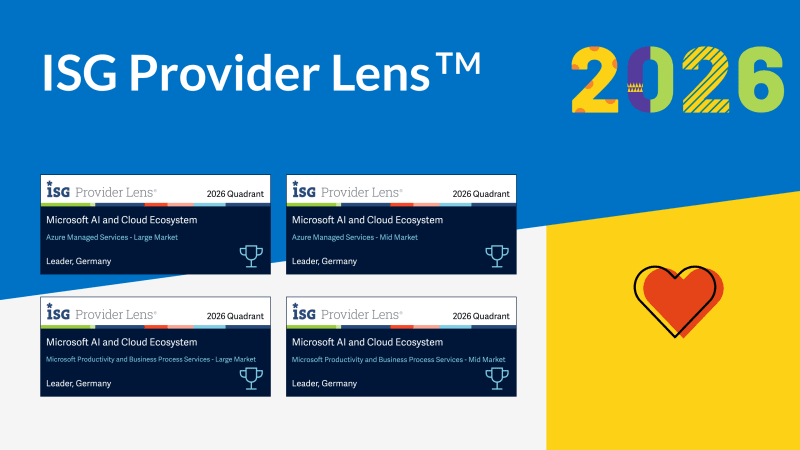
Four Times Leader. glueckkanja in the ISG Study Germany 2026
The ISG Provider Lens® study 2026 positions glueckkanja as a Leader in Germany in four quadrants: Microsoft Productivity and Business ...

From Rising Star to Leader. glueckkanja in the ISG Study Switzerland 2026
The ISG Provider Lens® study 2026 positions glueckkanja as a Leader in Switzerland in the Microsoft AI and Cloud Ecosystem ...

Outbreak. What the OpenAI/Hugging Face incident reveals and what it doesn't
An AI agent breaks out of its test environment, finds a zero-day, and hacks another company. Sounds like a movie ...

Leader and Rising Star. glueckkanja in the ISG Cybersecurity Study 2026
The ISG Provider Lens® study Cybersecurity 2026 names glueckkanja a Leader in the Next-Gen SOC/MDR Services (Midmarket) quadrant. In the ...
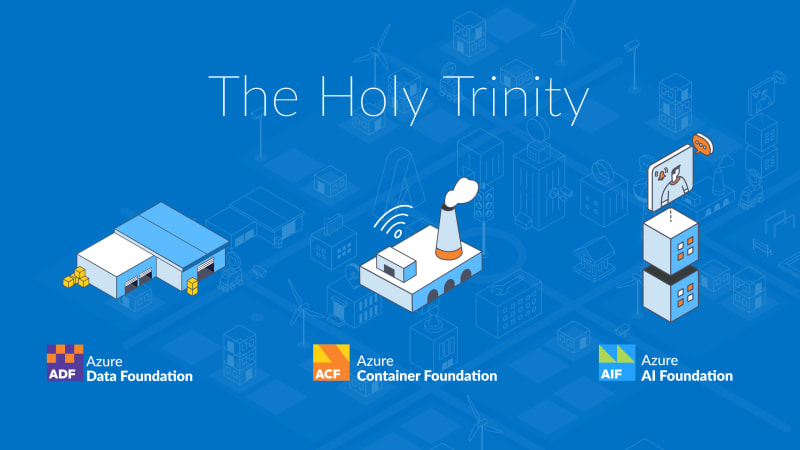
The Holy Trinity: What AI Actually Needs to Get to Work
A manufacturing company wants to know which of its 14,000 SKUs actually turn a profit. The answer sits in three ...
Contract Signed: Here's How Your Onboarding Works
Your contract is signed, the first big step is done. But what happens now? We take you behind the scenes ...

Microsoft Frontier Partner: we are among the few
Microsoft has recently introduced a new top-tier recognition within its AI Cloud Partner Program: the Frontier Partner Badge. It is ...
160 Kilometers for a Good Cause
Eleven colleagues, 16 laps, 160 kilometers, a thunderstorm, and a podium finish: glueckkanja took part in the Frankfurter Runden 2026 ...

Anatomy of an Unknown AMOS Stealer: From Alert to Immunity in Hours
A previously undocumented AMOS stealer variant compromised a macOS endpoint. No known hashes, no C2 data in any public database. ...

Why Edge Should Be Your Only Corporate Browser
The browser nobody satisfies chose became the one everybody manages. Most companies never made a deliberate decision for Chrome; it ...

No Malware Needed. Just One Admin Account.
On March 11, 2026, Handala wiped devices across 79 countries using nothing but a compromised Intune admin account. No malware, ...