

Azure
Data Foundation

The agent is ready, the data is not. We build the platform your agents are allowed to answer from, as code in your tenant, and we run it to the same standard as Azure Foundation and AI Foundation.

The answer is 42
A manufacturer came to us with an AI sales app. The use case had been signed off, the budget approved, and the agent was supposed to answer questions about margins and delivery times from the company's own figures. The first workshop ended with a data platform. That is not an isolated case but this year's pattern: in 2024 companies asked for a data platform to build reports, in 2026 they ask for one because they want AI, and nearly every use case that reaches us starts with a data question. Douglas Adams anticipated this moment in 1979, when a computer spent seven and a half million years calculating, announced 42, and only then did anyone notice that nobody knew exactly what the question was. In a company the situation is reversed. The question is precise, but nobody knows which table the answer should come from, whether finance and sales mean the same thing by margin, or who is allowed to see it at all. The model is rarely the problem, the platform underneath almost always is, and that is exactly what we build and run.
of organizations either lack the right data management practices for AI or don't know whether they have them.
of AI projects without AI-ready data are forecast to be abandoned by the end of 2026.
of data and analytics governance initiatives will fail by 2027 because no concrete business need is driving them.
is the longest gap between two Foundation updates of your platform, and in between we keep it up to date continuously.
Four obvious shortcuts
Under time pressure, people take the shortest route, and for data there are four of them. Each has respectable reasons behind it, and none of them carries you past the first use case.
“It's all in Excel anyway.”
Every department maintains its own version of the truth, and each one is internally consistent. An agent that reads them all will repeat every one of those truths, with the same confidence.
“We'll build it ourselves.”
That works as long as the two people who know how it was built stay. The job market for data engineers with operations and governance experience, however, is remarkably good at poaching them.
“License first, then we'll see.”
A Fabric capacity or a Databricks workspace can be booked in an hour. Catalog, permissions and network don't follow from that on their own; they get built, or they are missing.
“We'll have someone set it up once.”
The platform is accepted and handed over, and from the day of acceptance it starts to age. Databricks and Microsoft keep shipping new runtimes and features, the acceptance report does not.
All four treat the data platform as a purchase. We treat it as operations: the Azure Data Foundation is a versioned platform that we build in your tenant, develop further with every release and run for as long as you need it.
From raw data to answers you can rely on
In the Azure Data Foundation, data passes through three layers named after Olympic medals, though none of them is meant as a consolation prize. Bronze ingests the data from your sources unchanged, Silver cleans and standardizes it, and Gold delivers it, modeled for the business, to Power BI, to data science and to your agents. Above them sits the catalog, which knows for every table where it comes from and who is allowed to see it, and beneath them the foundation, which we deliver as code.
- SourcesERP, CRM, line-of-business applications, files and on-premises systems
- BronzeRaw dataIngested unchanged and in full, so every later figure can be traced back to its origin.
- SilverCleanedDuplicates removed, formats standardized, quality checked.
- GoldBusiness-readyOne definition per metric, agreed with the business units that own it.
- ConsumptionPower BI, data science and agents, with the permissions the catalog grants
Six building blocks, three blueprints, one standard
The agent sees what you see, and nothing more
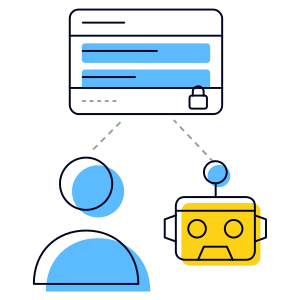
By the time the first agent arrives, a question of order has become a question of liability. An agent that summarizes salary data because it happened to sit in a shared table is not making a mistake; it is doing what its permissions allow. In the Azure Data Foundation, Microsoft Entra ID is the identity provider, the catalog knows the origin, classification and authorized users of every table, and permissions apply at catalog, schema and table level. Agents such as the Fabric data agent or a Genie Agent in Azure Databricks query with the user's identity and therefore see exactly what the person they are acting for is allowed to see. This is not a feature you add on later but the prerequisite for everything the AI Foundation builds on top of it.
What changes for you

One metric, one definition
The Gold layer holds every metric exactly once. Finance, sales and the agent all work with the same number, and from now on they argue about what it means, not where it came from.
Permissions that travel with the data
Permissions are attached to the data, not to the application. Whether it's Power BI, a notebook or an agent, what applies is whatever the catalog grants the user in question.
Reproducible, not one-off
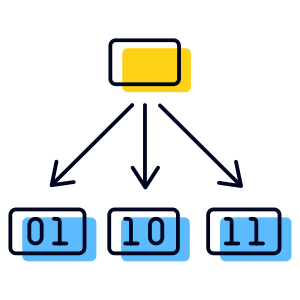
The platform is created from code and can be rebuilt from that code at any time. Every change is versioned and traceable as a diff, including for your auditors.

One price per Data Environment
Billing is per Data Environment, meaning per independently operated instance of the platform, not per person-day. You know what operations will cost before they begin.
What we run and what stays with you
A managed service is only as good as its boundaries. That's why we are just as clear about what we take on as about what stays with you, and both fit on three levels.

This is where your business lives. We build the first use cases together with your teams and pass on the know-how until you can carry this layer yourselves.
- Pipelines
- Data models
- KPIs and reports
- Agents and business logic

So the platform runs when your teams need it and costs no more than necessary.
- Cluster health
- Runtime and library updates
- Backup and restore
- Table maintenance
- Fabric capacity scheduling
- Cost optimization
- Monitoring with severities
- Monthly service review

So every environment matches the code, and the code matches the current release.
- OpenTofu and Terragrunt
- Configuration repository per customer
- Drift Detection and remediation
- Release Train
A platform with a version number
Data platforms rarely become obsolete in spectacular fashion; they do it quietly, one runtime at a time. That's why the Azure Data Foundation has releases like software, and your environment follows them.
- 1Publish the releaseWe keep developing the Foundation and release new versions with documented changes.
- 2Roll out the versionThe Release Train brings the new version into your environment, with every change as a traceable diff.
- 3Check for driftEvery week, Drift Detection compares code and environment and reverts any deviations.
- 4Update runtimesWe keep Databricks runtimes and libraries current on a monthly to quarterly cycle.
A Foundation update at least every twelve months, included in the price
We keep your platform up to date continuously, and it gets a Foundation update no later than twelve months in. A platform rolled out in April 2026 therefore won't look like a relic of April 2026 in 2028.
From the first meeting to operations
- Take stockTake stockIn the assessment, which takes one day, we review your sources, existing platforms and the use cases that come first.
- Set the parametersSet the parametersIn a one-day workshop, we decide together on the blueprint, environments, sources and permission model.
- Roll out the platformRoll out the platformWithin two to four days, the platform is built from code, in your tenant and to your parameters.
- Hand over and runHand over and runAfter a one-day handover and one to two weeks of onboarding, we take over operations as the Managed Azure Data Foundation.
From data silo to platform
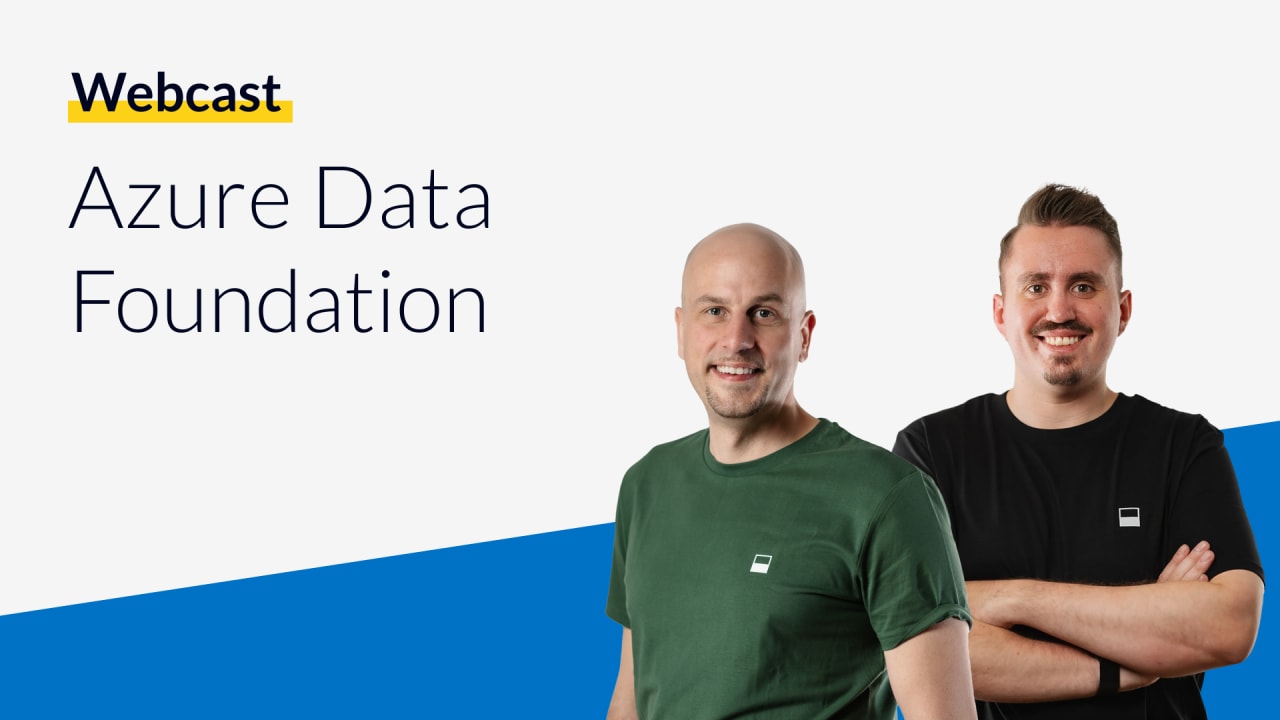
Data lives in ERP systems, sensors, log files and file shares, and only rarely where it's needed. In the webcast, Florian Stöckl and David Fengler show why the lakehouse is replacing the classic data warehouse, how data flows through Bronze, Silver and Gold, which of the three blueprints suits which team and how operations and project phases fit together.
The Holy Trinity


It starts with one day
Assessment
Before any proposal comes an assessment of where you stand. In one day we go through your sources, your existing platforms and your first use cases, and we record which blueprint fits and what the platform has to deliver. The results belong to you, whoever you go forward with.
 SourcesIntegrationWhich systems get connected, and in what order.
 Use casesAnalytics & AIWhich questions should be answered first, from the report to the agent.
 GovernanceCatalog and permissionsWho is allowed to see which data, and how that maps to the catalog.
 OperationsBlueprint and environmentsWhich blueprint fits and how many Data Environments you need.
What we get asked in the first conversation
Azure Databricks or Microsoft Fabric, which is right for us?
That depends less on the technology than on your teams. If you code your data processing and train your own models, Azure Databricks serves you well; if you mainly work with Power BI and want to get business units to results quickly, Microsoft Fabric does. For both, there's the hybrid blueprint. We work out the recommendation in the assessment.
Is the Azure Data Foundation the same as Azure Data Factory?
No. Azure Data Factory is a Microsoft service for data integration. The Azure Data Foundation is our platform of architecture, code and operations, in which integration tools are one building block among several. That's also why we never abbreviate it.
We already use Databricks or Fabric. Do we have to start over?
Not necessarily. In the assessment we check what can be carried over and what is better rebuilt from code. Your data and pipelines remain yours; we bring the platform underneath up to the Foundation standard.
Where does our data live?
In your tenant and in the Azure region you choose. We build and run the platform where it sits, not in an environment of our own.
What stays with us?
In the long run, pipelines, data models, KPIs and business logic, because that's where your business lives. At the start, we build the first use cases together with your teams and pass on the know-how until they can carry this layer themselves. We run the platform underneath.
Do we need our own data team?
Not for running the platform, we take care of that. For the business logic, you'll need people who understand your data in the long run, in-house or at a partner, and we help you build that expertise.
What is a Data Environment?
The unit we bill by: an independently operated instance of the platform, for example for one legal entity or a clearly defined data domain. How many you need becomes clear in the assessment.
How does the Azure Data Foundation relate to the AI Foundation?
The Data Foundation makes your data usable for agents, and the AI Foundation provides the platform those agents run on. Both share identity, guardrails and operating model, and both are built on the Azure Foundation.
What does the Azure Data Foundation cost?
You pay a one-time setup fee and a monthly amount per Data Environment, with the regular Foundation update included. You'll receive a proposal after the assessment, once it's clear which blueprint it will be and how many environments you need.
Further reading

Who Built These Agents?
E7 bundles E5, Copilot, the Entra Suite and Agent 365. But a license doesn't clean up your tenant. Who is ...

Outbreak. What the OpenAI/Hugging Face incident reveals and what it doesn't
An AI agent breaks out of its test environment, finds a zero-day, and hacks another company. Sounds like a movie ...
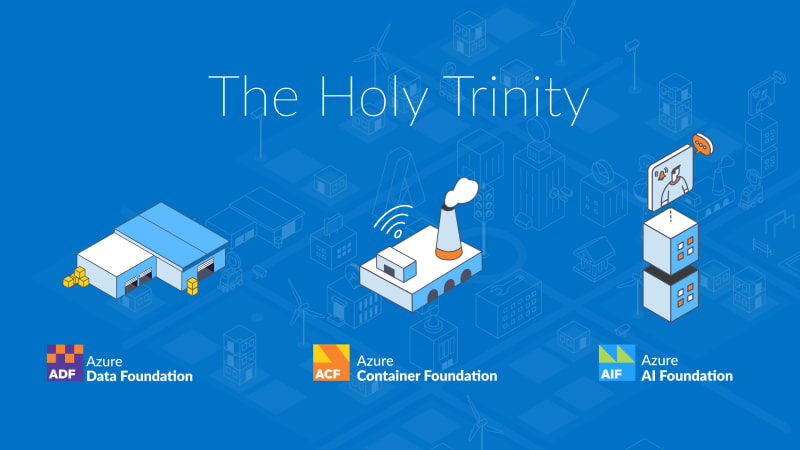
The Holy Trinity: What AI Actually Needs to Get to Work
A manufacturing company wants to know which of its 14,000 SKUs actually turn a profit. The answer sits in three ...
Microsoft Frontier Partner: we are among the few
Microsoft has recently introduced a new top-tier recognition within its AI Cloud Partner Program: the Frontier Partner Badge. It is ...
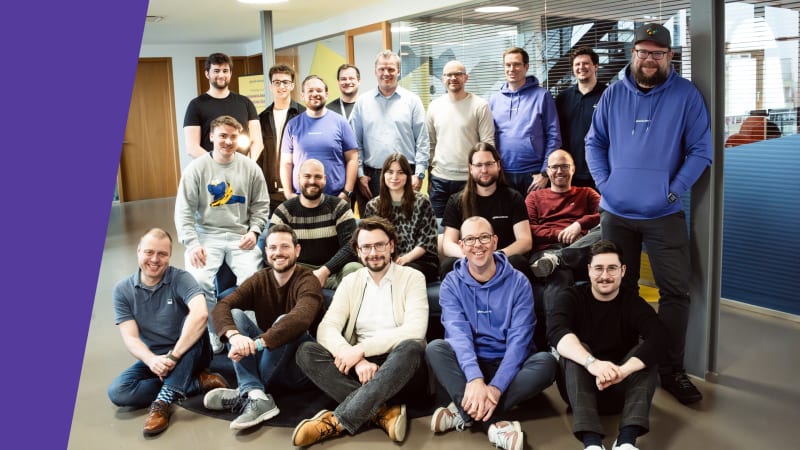
Six Agents. Four Weeks. Real Production.
Six companies, four weeks of building, six working AI agents — that was the first glueckkanja AI Agent Hackathon. Kiekert, ...
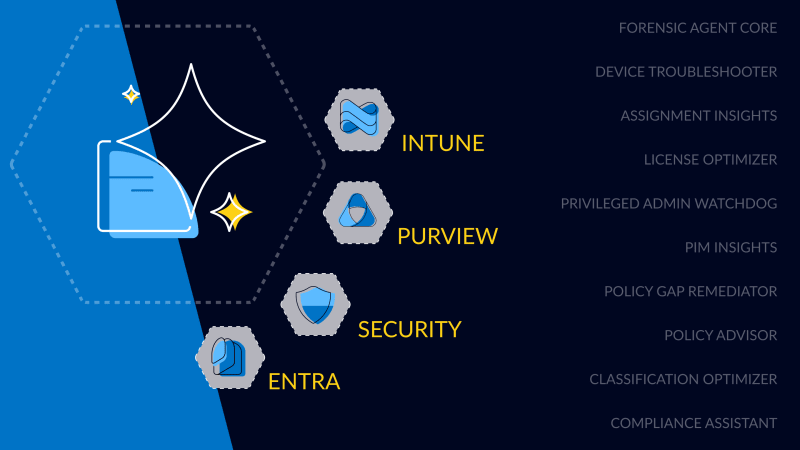
First Worldwide: glueckkanja Security Copilot Agents
glueckkanja is among the first partners in the Microsoft Security Store Preview, delivering 10 Microsoft-native Security Copilot Agents across Security, ...
Contact us now
